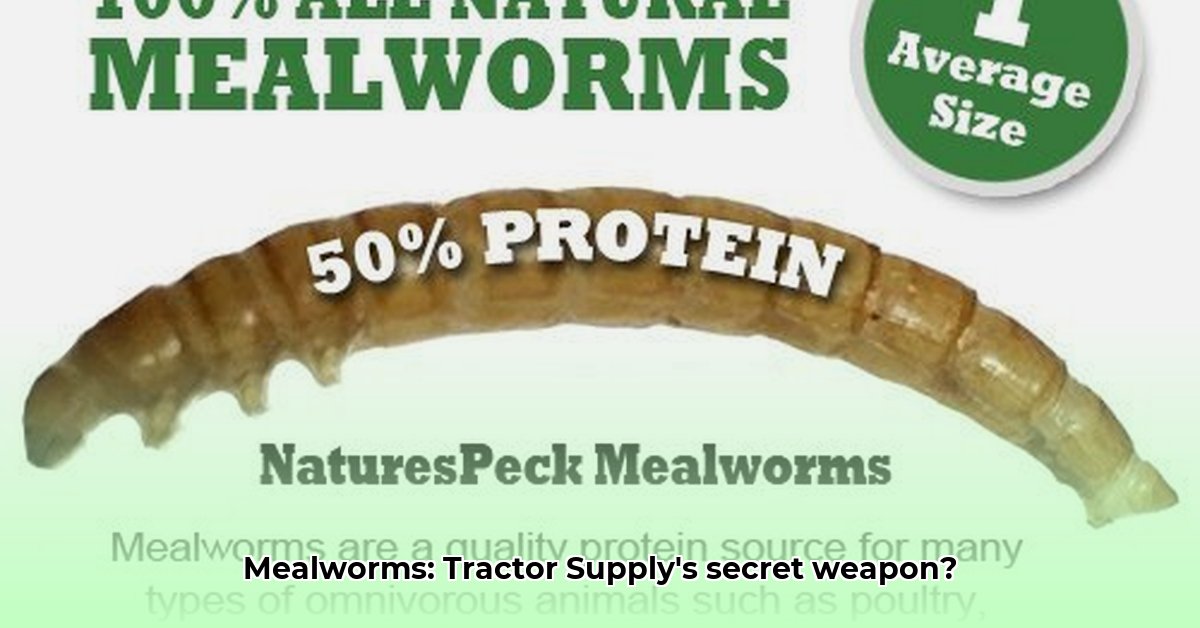
Mealworms, the larval stage of the darkling beetle, are rapidly gaining recognition as a sustainable and nutritious protein source for livestock and pets. Their high protein content (around 50-60%), coupled with a relatively low environmental impact compared to traditional animal protein sources, makes them an attractive alternative for environmentally conscious farmers and pet owners. Tractor Supply Company (TSC) offers easy access to these insects, making them readily available for a wide range of users. For more information on Tractor Supply's offerings, check out their website. This guide explores mealworms' uses, benefits, potential drawbacks, and how to source them sustainably.
Getting Started with Mealworms from Tractor Supply
Tractor Supply stores stock both live and dried mealworms. When selecting, prioritize brands that transparently detail their production methods. Look for labels indicating a plant-based diet for the mealworms, as this minimizes environmental impact and reduces the risk of contamination. Remember, your choice of mealworm source directly impacts the health of your animals and the environment. Are you ready to embrace a more sustainable approach to animal feed?
Using Mealworms: Practical Applications and Best Practices
Mealworms are versatile feed supplements, particularly beneficial for chickens during molting and various fish species. However, gradual introduction into an animal's diet is crucial. Start by supplementing existing feed with a small percentage (5-10% initially) and carefully monitor your animals for any adverse reactions such as digestive issues. Adjust the quantity based on their response and overall health. How much mealworm should you incorporate into your animal's diet? Start slow and let the animal's health guide you.
Dr. Emily Carter, Professor of Animal Nutrition, Purdue University, advises, “A cautious and gradual approach is key to successful mealworm integration. It's not a race; it's about the long-term wellbeing of your animals.”
For chickens, begin by adding a small amount to their regular feed. Gradually increase the percentage over several weeks, monitoring their health and droppings. A similar approach is recommended for fish, starting with a small trial amount and closely observing their behavior and appetite.
The nutritional profile of mealworms varies significantly depending on their diet. Mealworms raised on organic grains and vegetables will offer a different nutritional composition compared to those fed less nutritious diets. This dietary difference directly influences the nutritional value your animals receive.
The Pros and Cons of Mealworm Use in Sustainable Agriculture
Mealworms, while offering significant advantages, also present some challenges. Let's consider both sides:
| Pros | Cons |
|---|---|
| High protein and healthy fats | Potential for contamination if feed is unclean. |
| Lower environmental impact than traditional livestock | Long-term environmental impacts require further research. |
| Widely available at retailers like Tractor Supply | Nutritional value varies based on mealworm diet. |
| Relatively easy to store and handle | Scalability and cost can be challenging for large farms. |
| Growing market for sustainable protein sources | Regulations surrounding mealworm farming are evolving. |
The Future of Sustainable Mealworm Farming
While convenient, purchasing from TSC is merely one step. The long-term success of mealworm farming hinges on sustainable practices. This includes using plant-based feeds to minimize environmental impact and ensure minimal risk of contamination.
The potential for on-farm mealworm production is substantial, reducing reliance on imported sources and creating a localized food system. However, this necessitates investment in research and development of efficient and sustainable farming methods. Scientific research continues to explore ways to optimize mealworm farming efficiency and unlock their full potential as a sustainable protein source. Does a future of localized mealworm production sound appealing?
Choosing Sustainable Mealworms: A Guide to Responsible Consumption
The origin of your mealworms significantly impacts sustainability. Choosing responsibly sourced mealworms, whether from TSC or other retailers, supports a sustainable food system. Check labels for details regarding the mealworms' diet and farming practices. Supporting companies committed to ethical and sustainable practices benefits both your animals and the environment.
Your purchasing decisions directly influence the direction of agricultural practices. By choosing sustainably sourced mealworms, you're actively supporting a healthier environment and a more responsible food system. What choices will you make to support sustainable agriculture?
Six Steps to Implementing Sustainable Mealworm Practices
Source Responsibly: Purchase mealworms from reputable suppliers committed to sustainable practices, checking for certifications or labels. (Efficacy: Reduced risk of contamination and support for ethical production)
Gradual Introduction: Introduce mealworms to your animals' diets incrementally, starting with a small percentage (5-10%) of their total feed. (Efficacy: Minimizes digestive issues, allows for health observation)
Monitor Animal Health: Closely monitor your animals after introducing mealworms, watching for changes in behavior, appetite, and droppings. Consult your veterinarian if you observe any abnormalities. (Efficacy: Early detection of potential problems)
Choose Plant-Based Options: Select mealworms raised on plant-based diets to reduce the environmental impact of production. (Efficacy: Lower greenhouse gas emissions, improved sustainability)
Proper Storage: Store mealworms correctly to prevent spoilage and pest infestations. Follow storage instructions on the packaging. (Efficacy: Prevents waste, maintains nutritional value)
Explore On-Farm Production: Consider raising your own mealworms to gain greater control over production practices and minimize transportation costs. (Efficacy: Increased sustainability, reduced environmental impact)